 Pizyn
How this test ran
Five prompts, each sent verbatim to both models on November 13, 2026, through this studio. First outputs kept, no re-rolls. GPT Image 2.6 (Flare) ran at medium quality, 1K, 9 credits per image ($0.05 of provider cost); Midjourney v8.2 ran on fast mode, 10 credits per generation ($0.055) — and each Midjourney generation returns four images, so we kept the first of the four, the same way we kept GPT's only output. Ten generations cost $0.53 in provider fees. GPT answered in roughly 18–69 seconds per image; Midjourney took roughly 80–111 seconds.
One note on fairness: Midjourney's four-images-per-generation is a genuine advantage — four chances to like a frame for 10 credits — and it is priced into the comparison below. The other difference is scope: GPT Image 2.6 edits photos, takes up to 16 reference images, draws GIFs and SVGs; Midjourney on this studio is text-to-image only. This test compares what both models do — draw from a prompt — and the capabilities gap gets its own section at the end.
Round 1 · Portrait
"Cinematic portrait of an old fisherman with a weathered face and white beard, wearing a yellow raincoat, standing on a foggy harbor dock at dawn, dramatic side light, film photography, Kodak Portra 400"
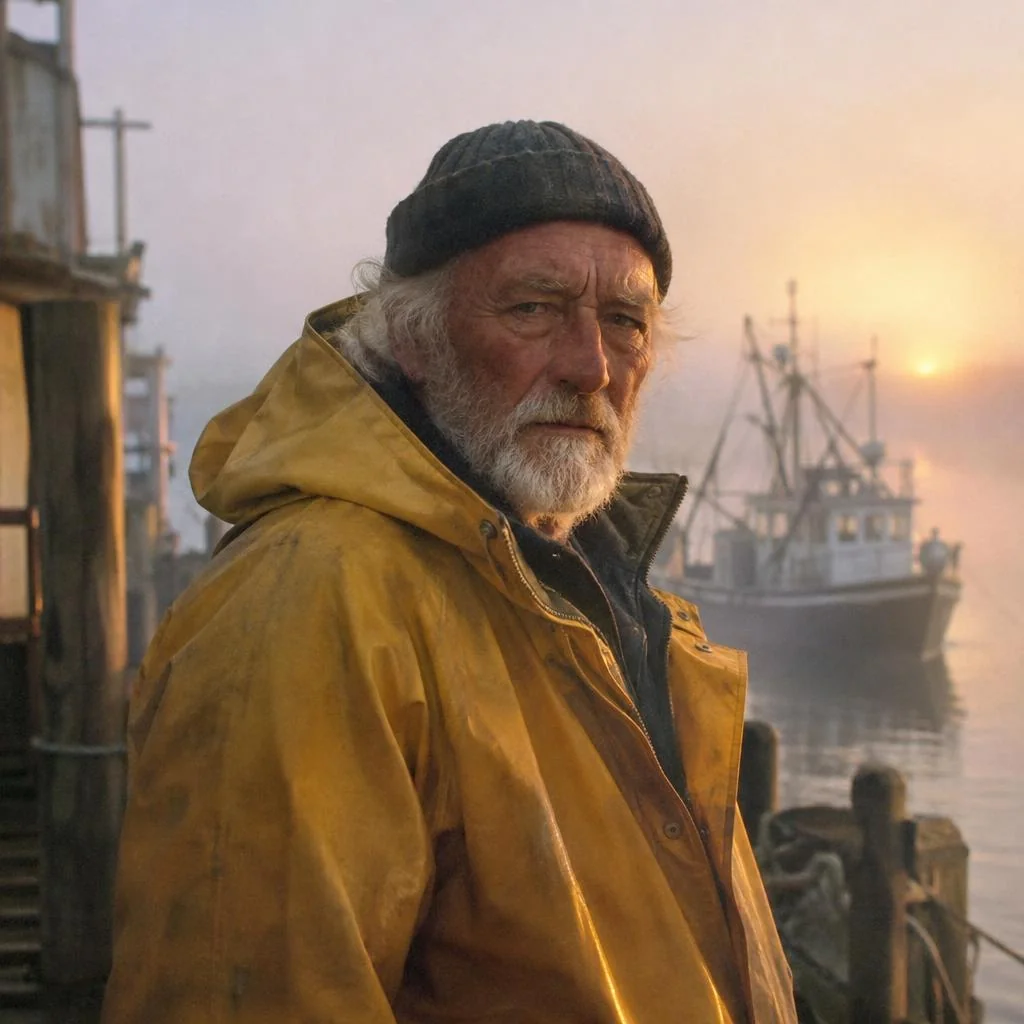
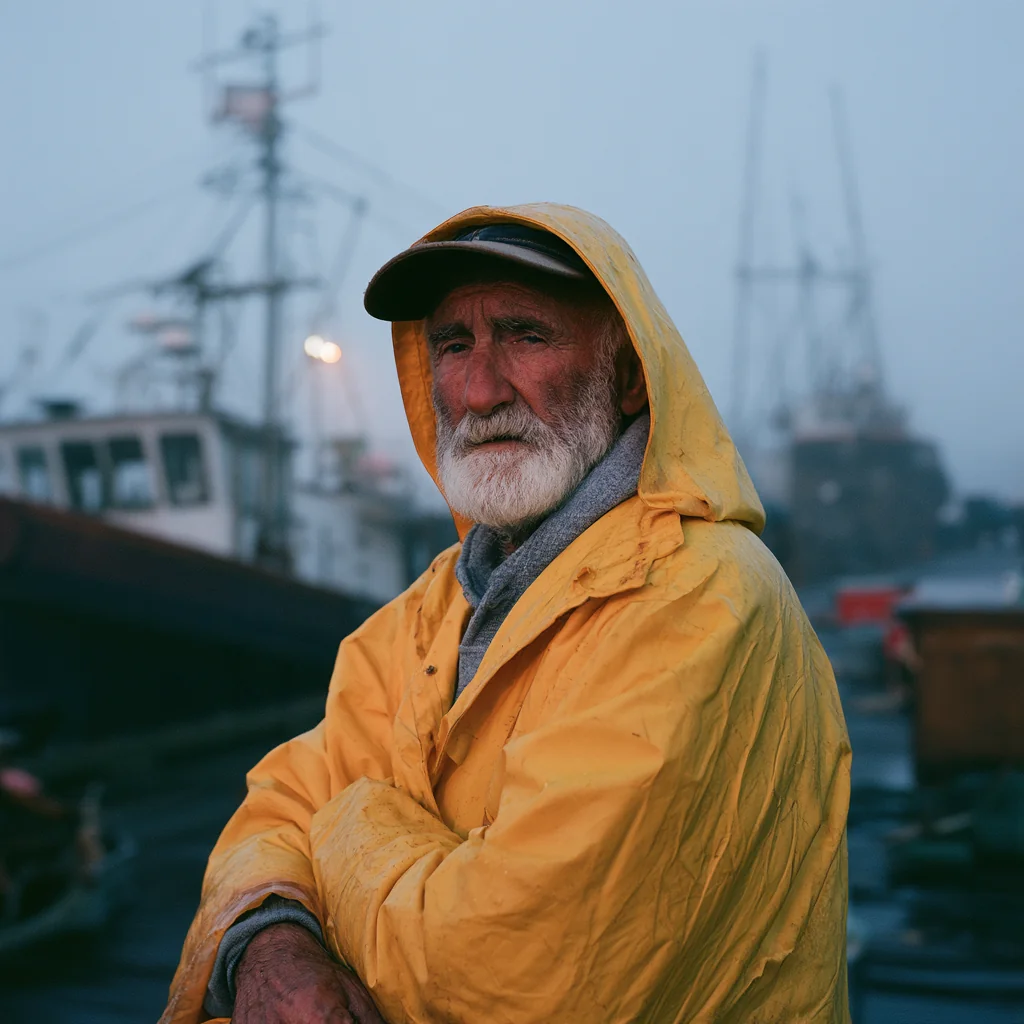
Verdict: tie. Same fisherman, two different mornings. GPT's dawn is warmer and more legible; Midjourney's fog is thicker and more cinematic. Both are portfolio frames.
Round 2 · Poster with text
"Vintage travel poster for Kyoto, a red torii gate and cherry blossoms, bold text at the top reading 'KYOTO', smaller text at the bottom reading 'JAPAN · SPRING 2027', retro screen-print style, flat colors"
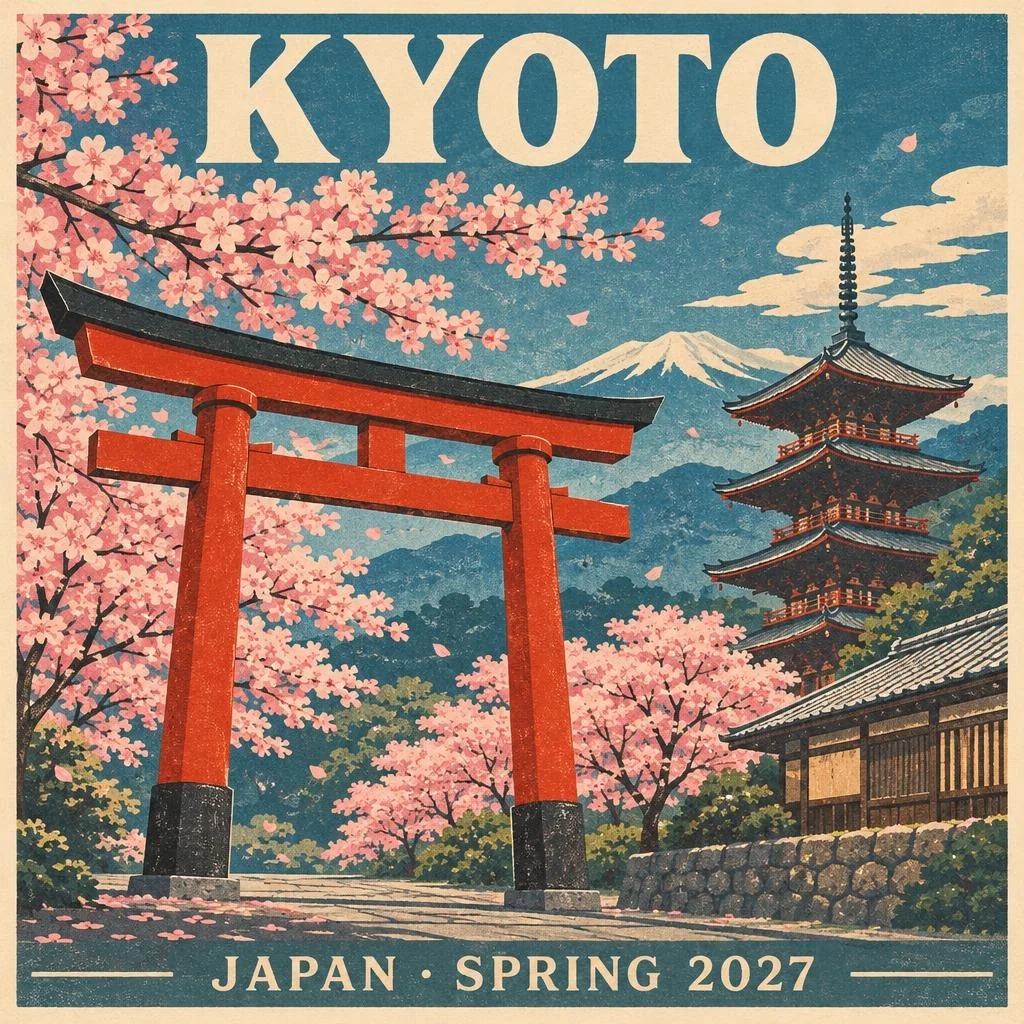
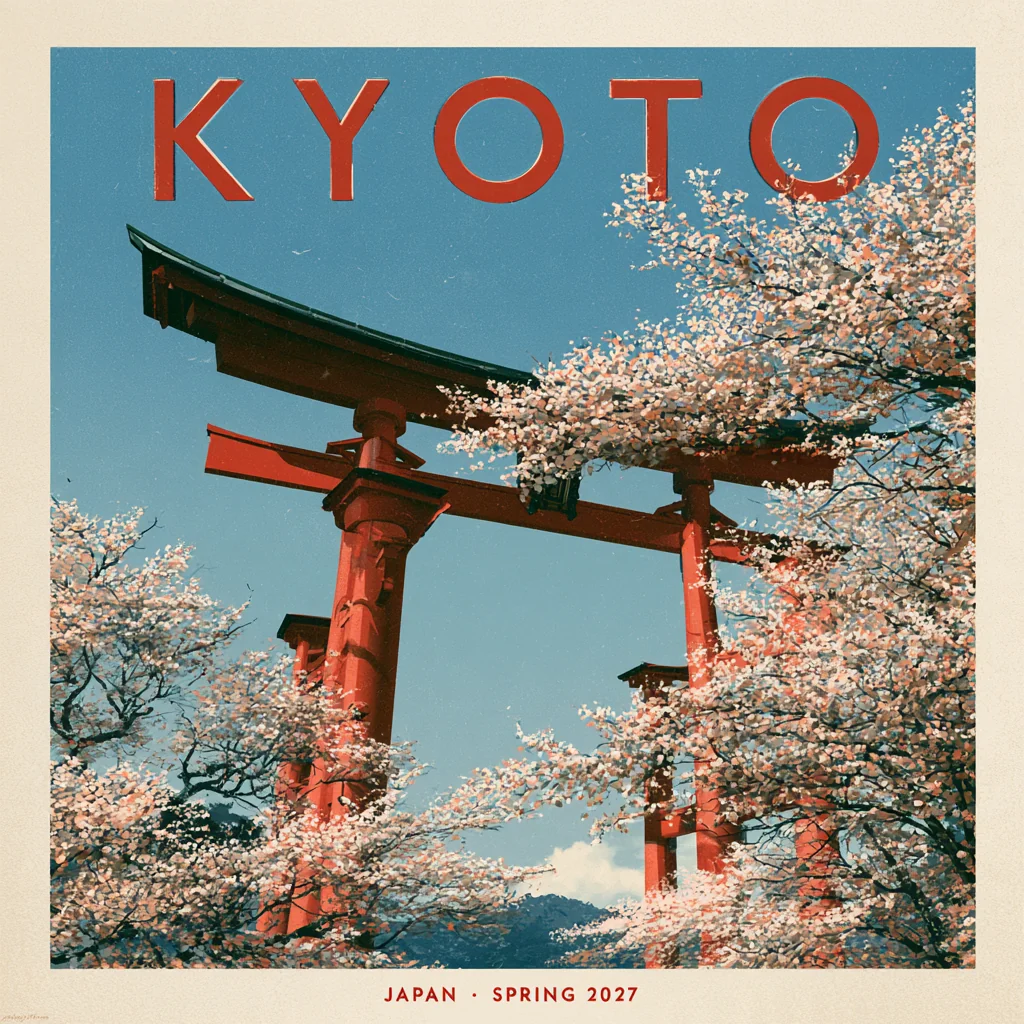
Verdict: GPT Image 2.6, clearly. Text rendering is the gap the leaderboards have always shown: GPT plans the layout and spells it right; Midjourney spells it right now too, but still thinks like a photographer, not a designer. For anything with words on it, this round is not close.
Round 3 · Fantasy illustration
"Ethereal elven forest city built into giant glowing mushrooms, fireflies drifting through the mist, moonlight, painterly fantasy concept art, rich teal and gold palette"
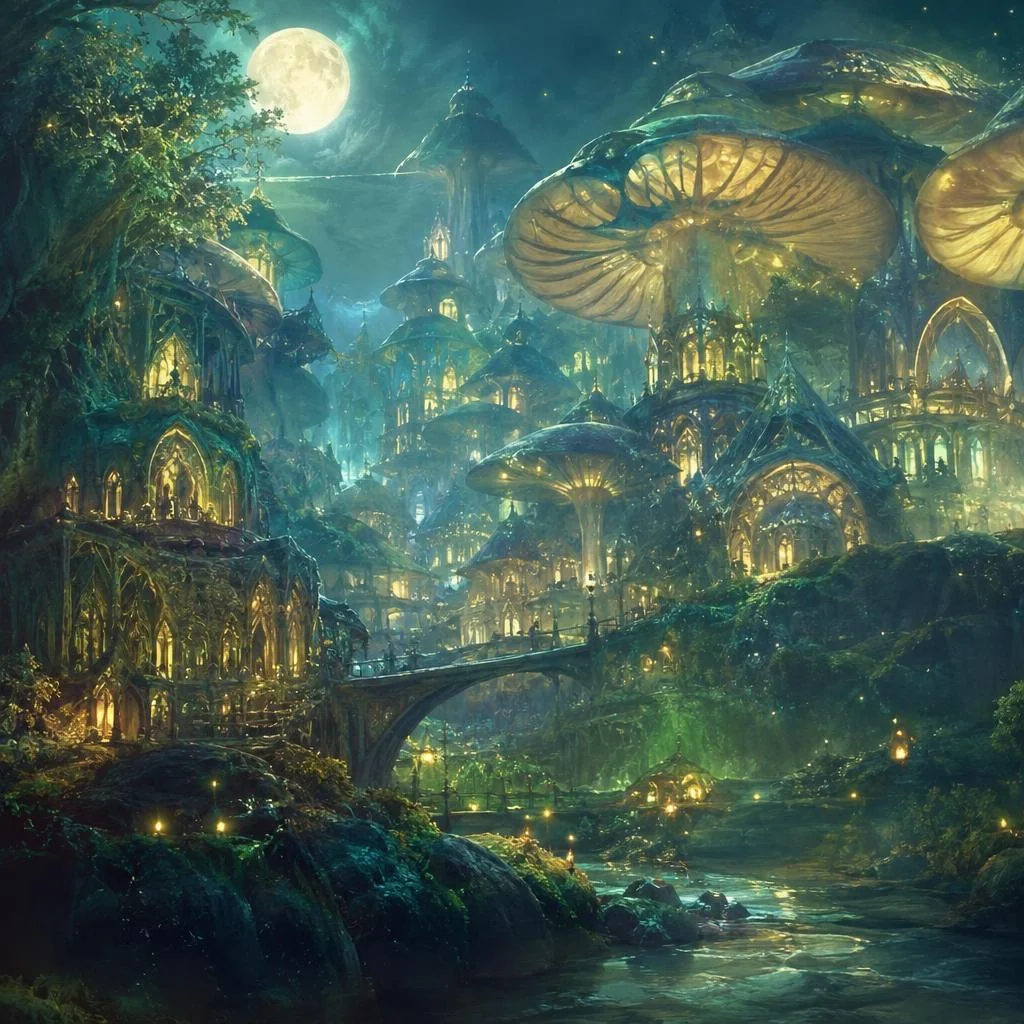
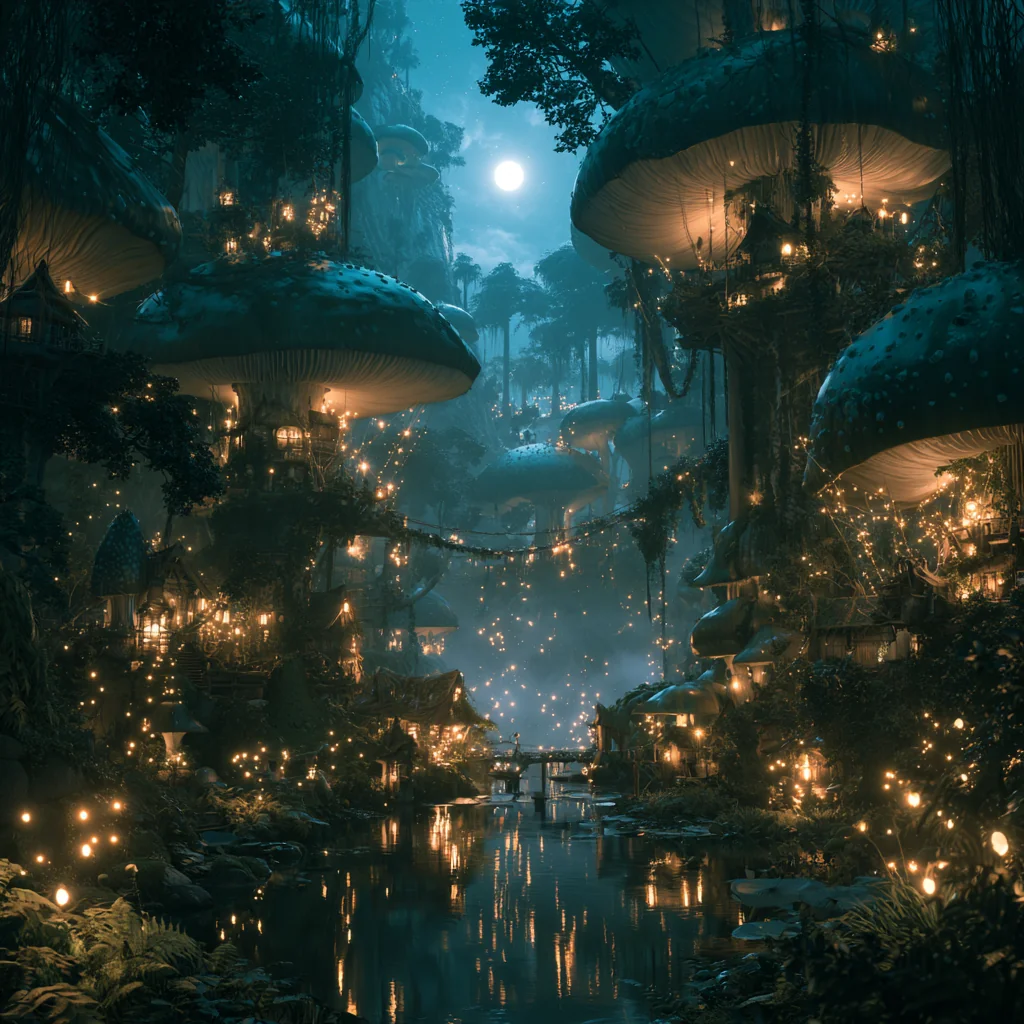
Verdict: Midjourney v8.2, narrowly. GPT followed the brief more literally; Midjourney made the better painting. This is the home turf the model has owned for years, and it still owns it.
Round 4 · Food photography
"Overhead food photograph of a rustic tomato basil pasta in a handmade ceramic bowl on a wooden table, parmesan shavings, linen napkin, soft natural window light, editorial food magazine style"
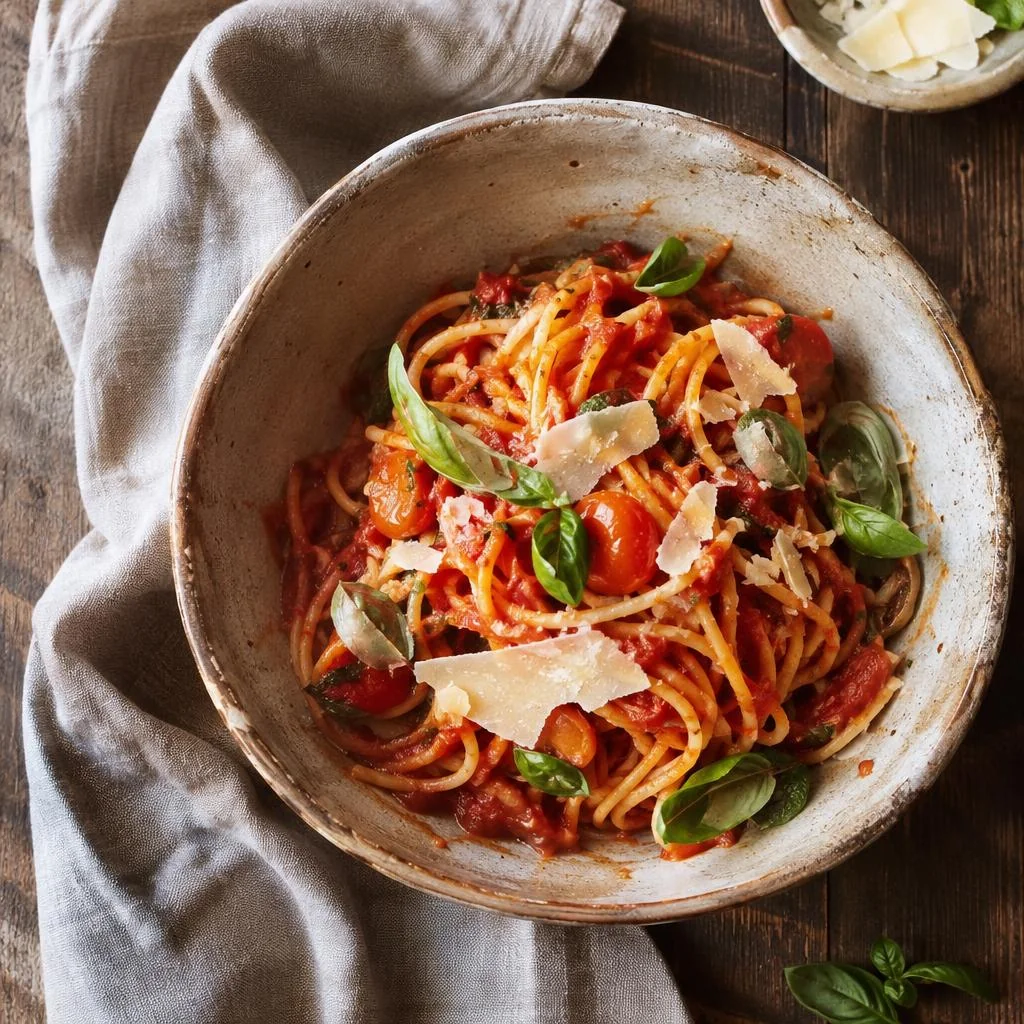
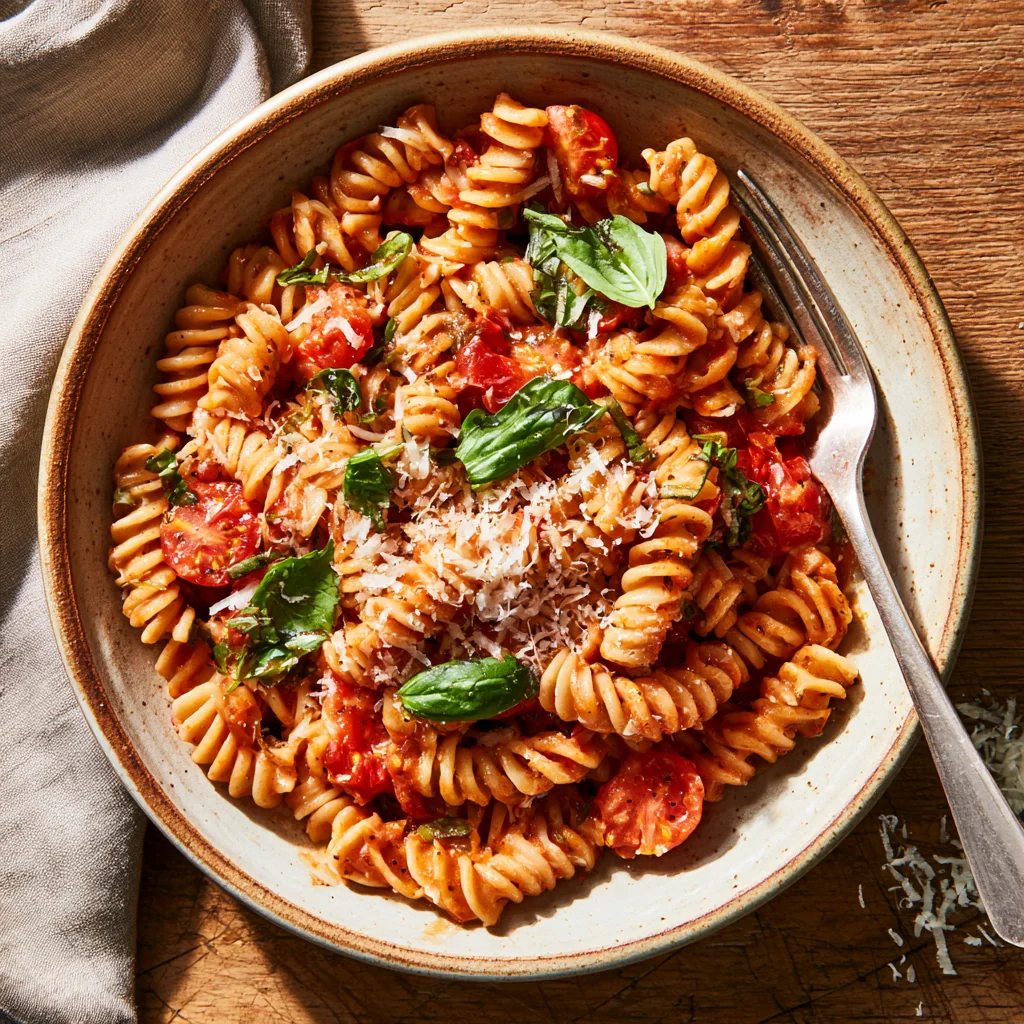
Verdict: tie. Both are magazine-ready. GPT followed the brief to the letter; Midjourney lit it better. A menu could run either frame.
Round 5 · Rainy Tokyo street
"Rainy night street in Tokyo, neon signs reflecting on wet asphalt, a lone pedestrian with a transparent umbrella, cinematic photography, moody atmosphere"
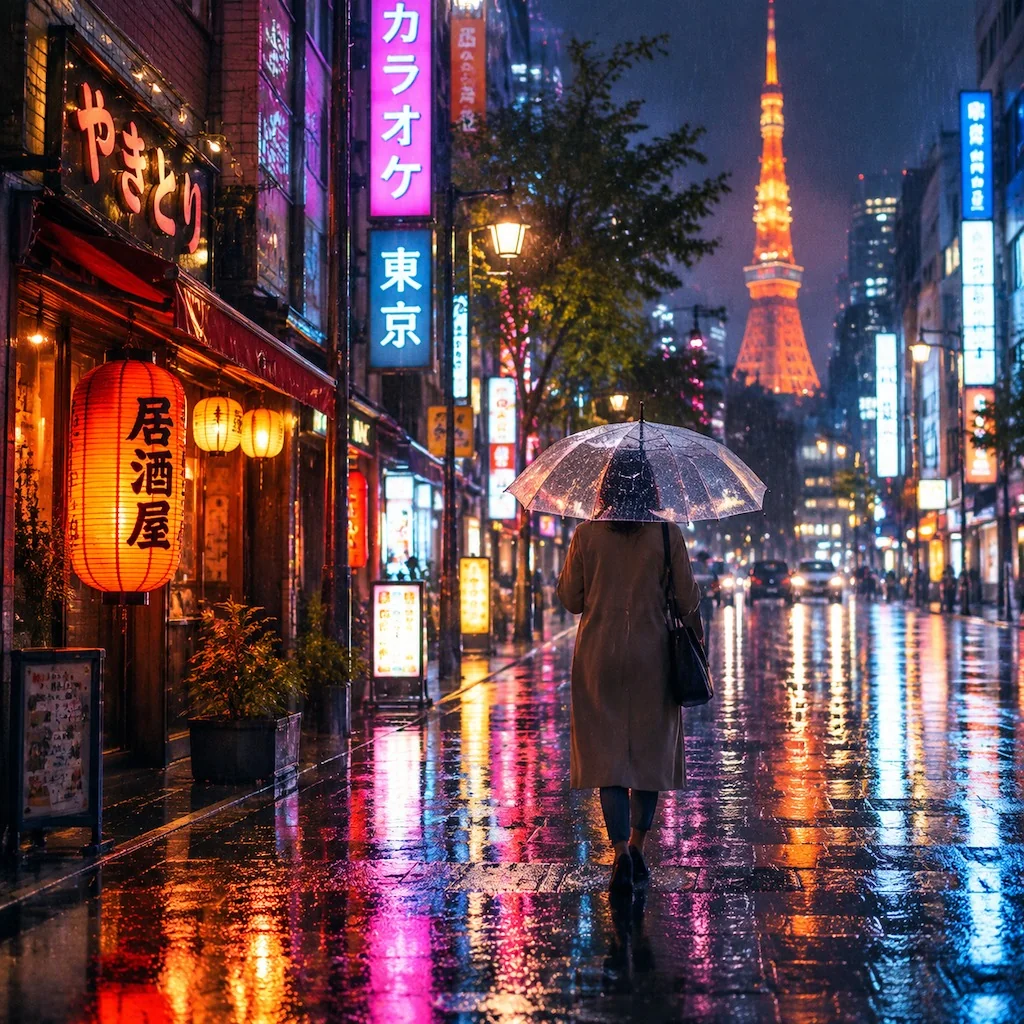
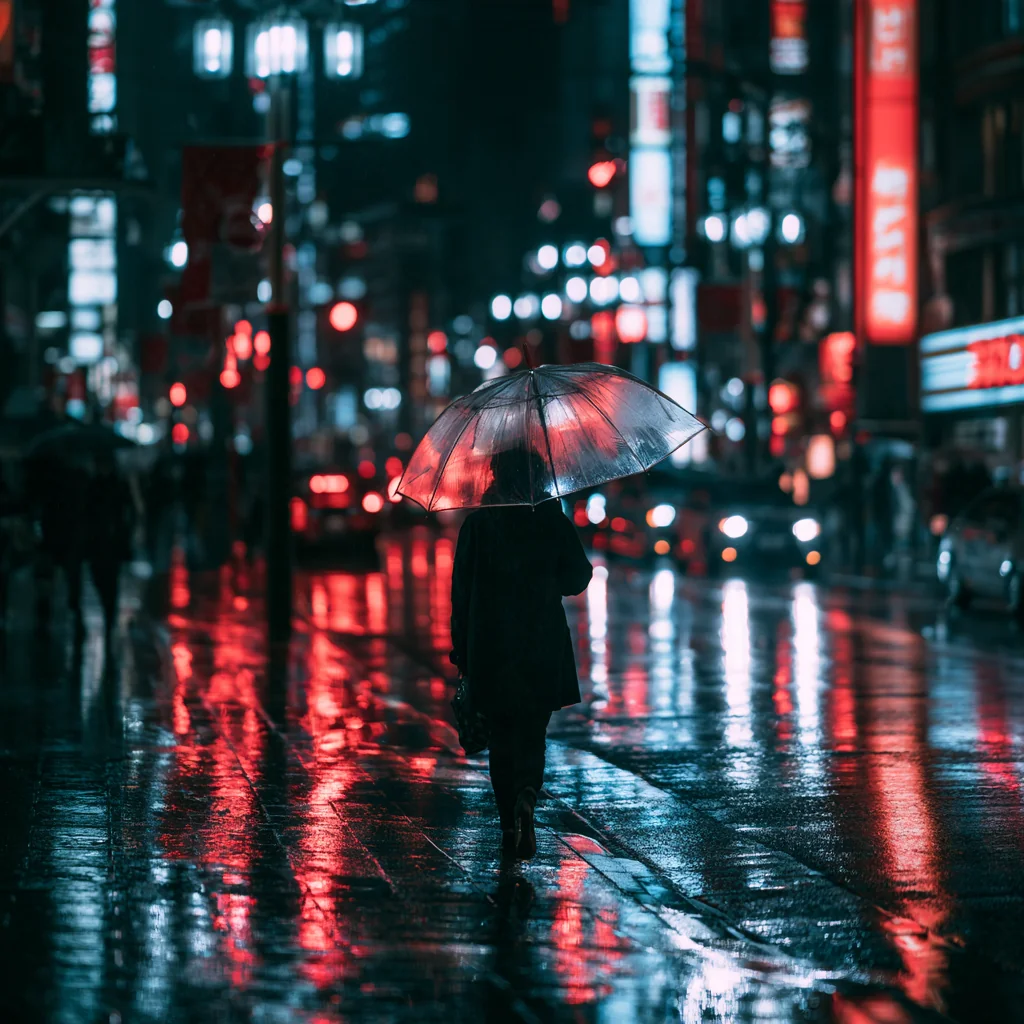
Verdict: tie — and the most instructive round in the test. GPT's street is a place you could navigate: the signs say real things. Midjourney's is a feeling you could fall into: the signs are colour. Same prompt, same pedestrian, same umbrella — the difference is what each model thinks a picture is for.
The scoreboard
| Portrait | Tie — GPT warmer, Midjourney moodier |
| Poster with text | GPT Image 2.6 — clean layout, flawless text |
| Fantasy illustration | Midjourney v8.2 — the more immersive painting |
| Food photography | Tie — both magazine-ready |
| Rainy street | Tie — GPT legible, Midjourney atmospheric |
| Images per generation | Midjourney — 4 images for 10 credits vs 1 for 9 |
| Speed | GPT Image 2.6 — ~18–69s vs ~80–111s |
| Editing & extras | GPT Image 2.6 — edits, 16 references, GIF, SVG |
One round each, three ties. The blind-vote boards tell a similar story: on the BudgetPixel photorealism arena (November 13, 2026), GPT Image 2.6 Sunburst sits #3 and Midjourney v8.2 #5 — close, with GPT ahead. Artificial Analysis does not list Midjourney at all (it has no public API), which is itself a data point about how differently these two models live.
The four-images difference
Per generation the prices look equal — 9 credits against 10. Per image they are not: Midjourney returns four images for its 10 credits, about 2.5 credits each, and you keep the best. GPT returns one image for 9. If your workflow is "generate a grid, pick the winner, move on", Midjourney is the cheaper model by a wide margin. If your workflow is "generate one exact frame, then edit it", GPT is the only one of the two that edits at all — Midjourney on this studio is text-to-image only, no reference images, no edits, no variations of an existing photo.
That shapes the real division of labour. Use Midjourney to explore: four variations per generation, the strongest default taste in the business, the best first draft for anything atmospheric. Use GPT Image 2.6 to finish: the poster that must spell the words right, the photo that must keep a face, the edit that must change one thing and leave the rest alone. Our character-consistency test is the proof — GPT held a face through the hardest edit brief in the set, a job Midjourney cannot take.
What each generation costs
Live studio rates, checked against the manifest before writing. Full pack pricing is on the pricing page; a credit is about $0.01 in pack terms.
- GPT Image 2.6 — 5 / 9 / 10 credits at low / medium / high (this test used medium, 9). Edits 8 / 11 / 13 credits, +3 per extra reference (up to 16). Top tiers run 35–78 credits at 2K.
- Midjourney v8.2 — 8 / 10 / 17 credits per generation at relax / fast / turbo (this test used fast, 10) — four images per generation, text-to-image only, 1K output.
The whole ten-generation test cost 95 credits — under a fifth of the $5 Mini pack — and returned 25 images, because Midjourney's five generations produced twenty frames. Per kept image, this was one of the cheapest comparisons we have run.
Where this test is limited
One output per prompt per model. GPT returns one image; Midjourney returns four and we kept the first — a fair rule, but Midjourney's best-of-four is usually better than its first-of-four, so this test slightly understates it. Flare, not Sunburst. GPT ran on Flare at medium quality; Sunburst at high or max would be sharper and dearer (10–78 credits). Five scenes are not a benchmark. Neither model was asked to do the other's signature job — no multi-reference edit, no style-reference blend — because only one of them can. Text is a moving target. Midjourney's spelling has improved sharply in v8.2; the gap that was once a chasm is now a layout gap, and it may close further.
Verdict: Midjourney to explore, GPT to finish
At nearly the same price per generation, this is not a price comparison — it is a workflow comparison. Midjourney v8.2 gives you four atmospheric variations for 10 credits and the best default taste in the business; GPT Image 2.6 gives you one exact image for 9 credits and the tools to edit it, restyle it, animate it and put words on it. Run the search on Midjourney, pick the winner, and finish it on GPT — or skip the handoff and let each model do the job it was built for.