 Pizyn
How this test ran
Four prompts, each sent verbatim to both models on November 21, 2026, through this studio. First outputs kept, no re-rolls. Grok Imagine Image 2.0 ran at 1K, 9 credits per image at the time of the test; Midjourney v8.2 ran on relax mode, 8 credits per generation — and each Midjourney generation returns four images, so we kept the first of the four, the same way we kept Grok's only output. Eight generations cost 68 credits in total. Grok answered in roughly 74–85 seconds per image; Midjourney took roughly 2 minutes per generation on relax.
One note on fairness: Midjourney's four-images-per-generation is a genuine advantage — four chances to like a frame for 8 credits — and it is priced into the comparison below. The other difference is scope: Grok edits photos, takes up to three reference images, and finishes at 2K for the same price as 1K; Midjourney on this studio is text-to-image only at 1K. This test compares what both models do — draw from a prompt — and the capabilities gap gets its own section at the end.
Round 1 · Portrait
"Cinematic editorial portrait of a young man in a navy wool coat, standing in golden-hour light on a city rooftop, skyline behind him, film still, shallow depth of field, shot on 35mm film, photorealistic"
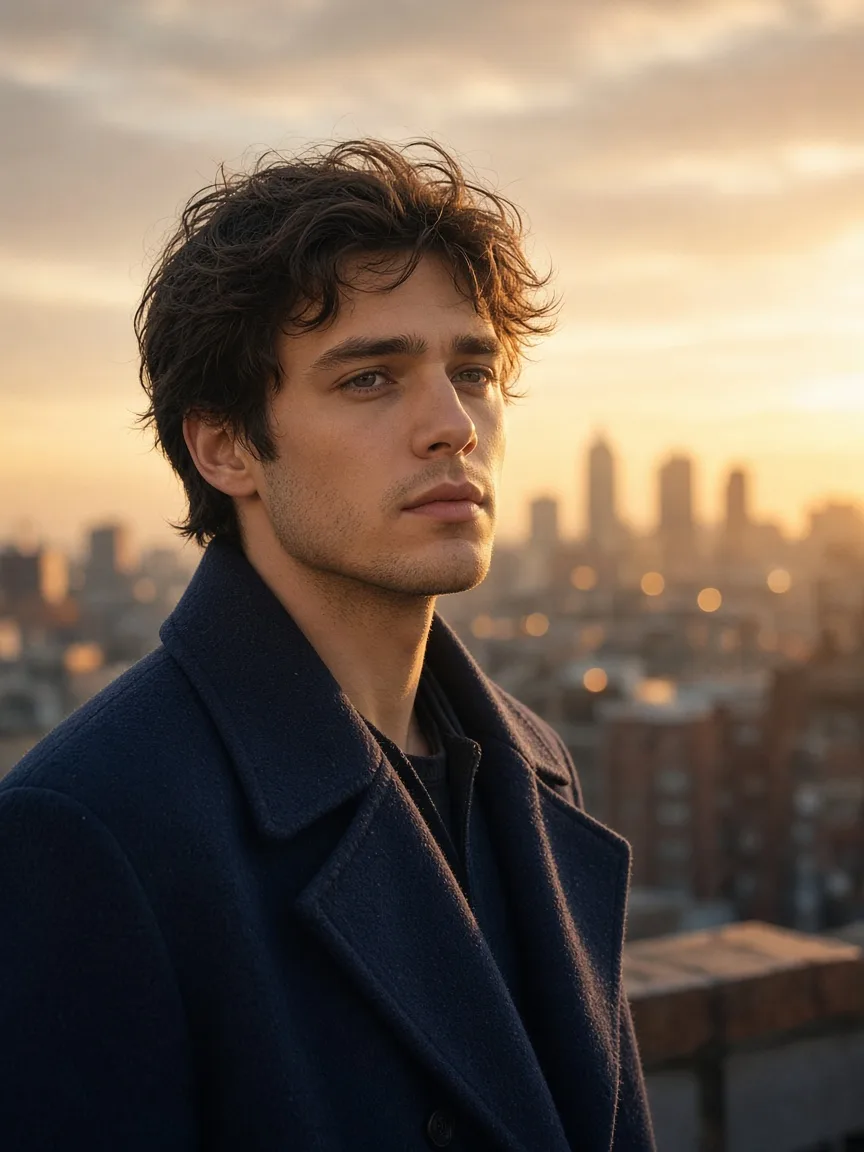
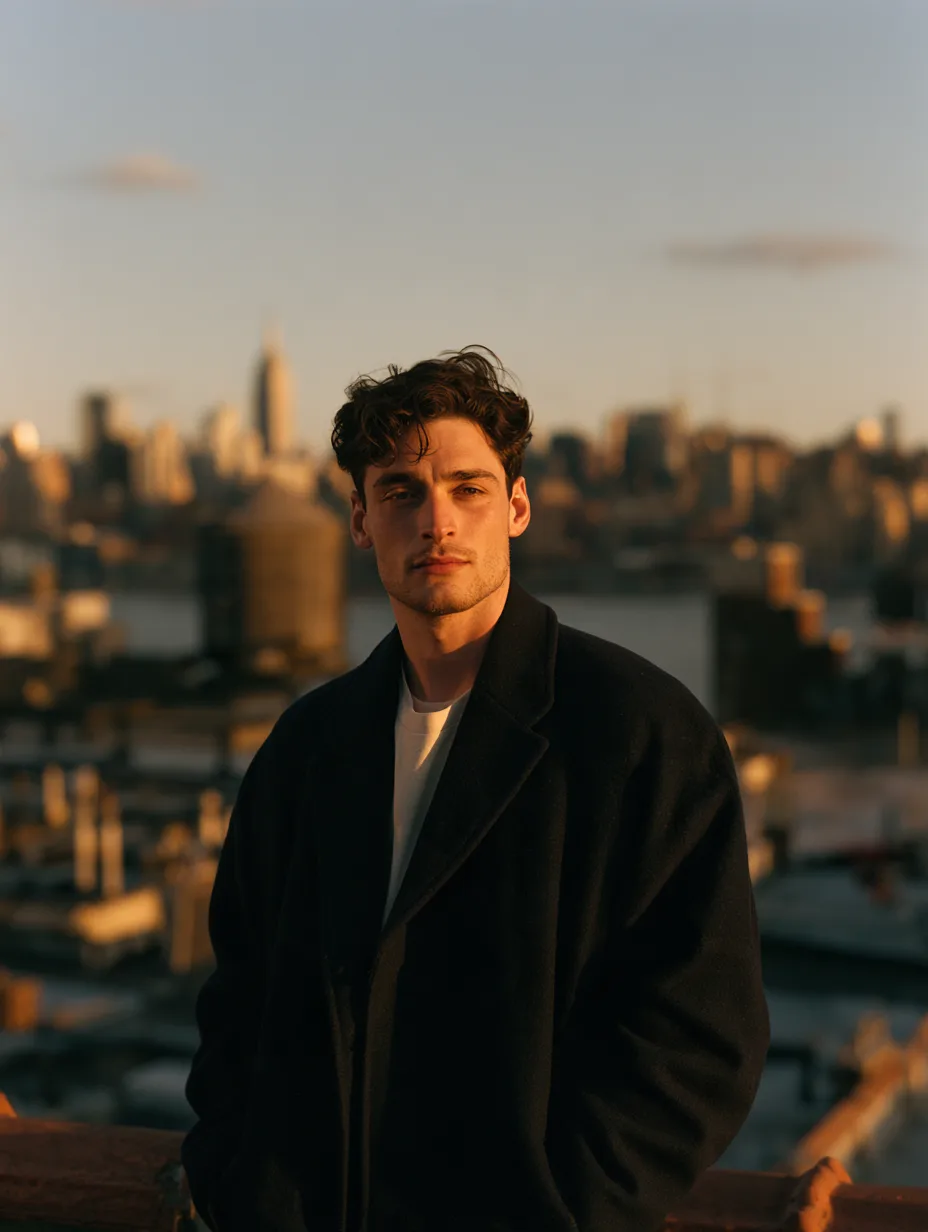
Verdict: Grok Imagine Image 2.0, narrowly. Both are portfolio frames. Midjourney's is the more editorial photograph; Grok's is the one that followed the brief — navy means navy. When the client specified the coat, that matters.
Round 2 · Poster with text
"Movie poster for a thriller called MIDNIGHT HARBOR, the exact title text 'MIDNIGHT HARBOR' in large bold white capital letters across the top, a lone detective silhouette on a foggy pier below, cinematic, photorealistic"
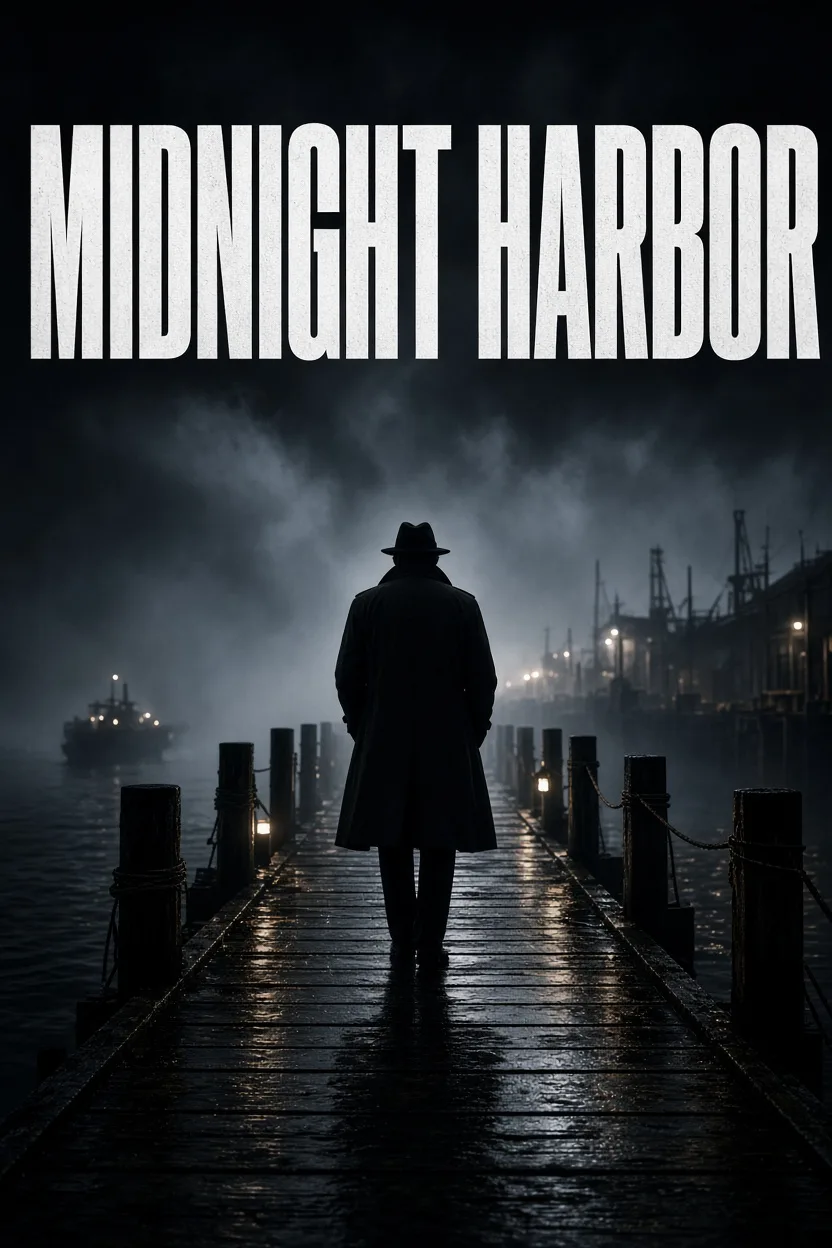
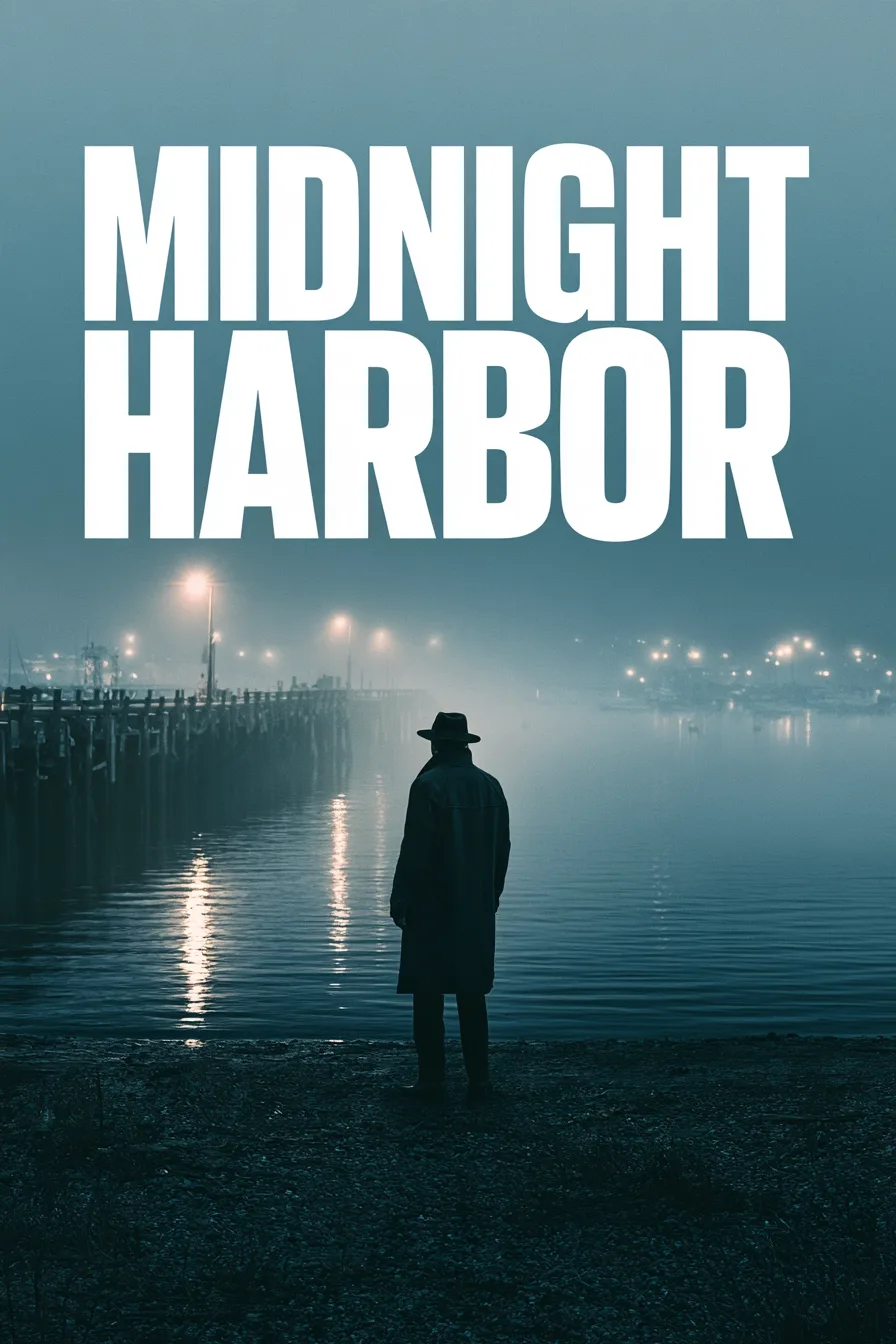
Verdict: Grok Imagine Image 2.0, clearly. Both spelled the title right; only Grok laid it out like the brief asked. This is the same gap our GPT Image 2.6 vs Midjourney test found: Midjourney thinks like a photographer, Grok thinks like a designer. For anything with words on it, the layout is the difference.
Round 3 · Product photography
"Luxury perfume bottle on wet black slate, water droplets on glass, dramatic side light, dark background, macro product photography, photorealistic"
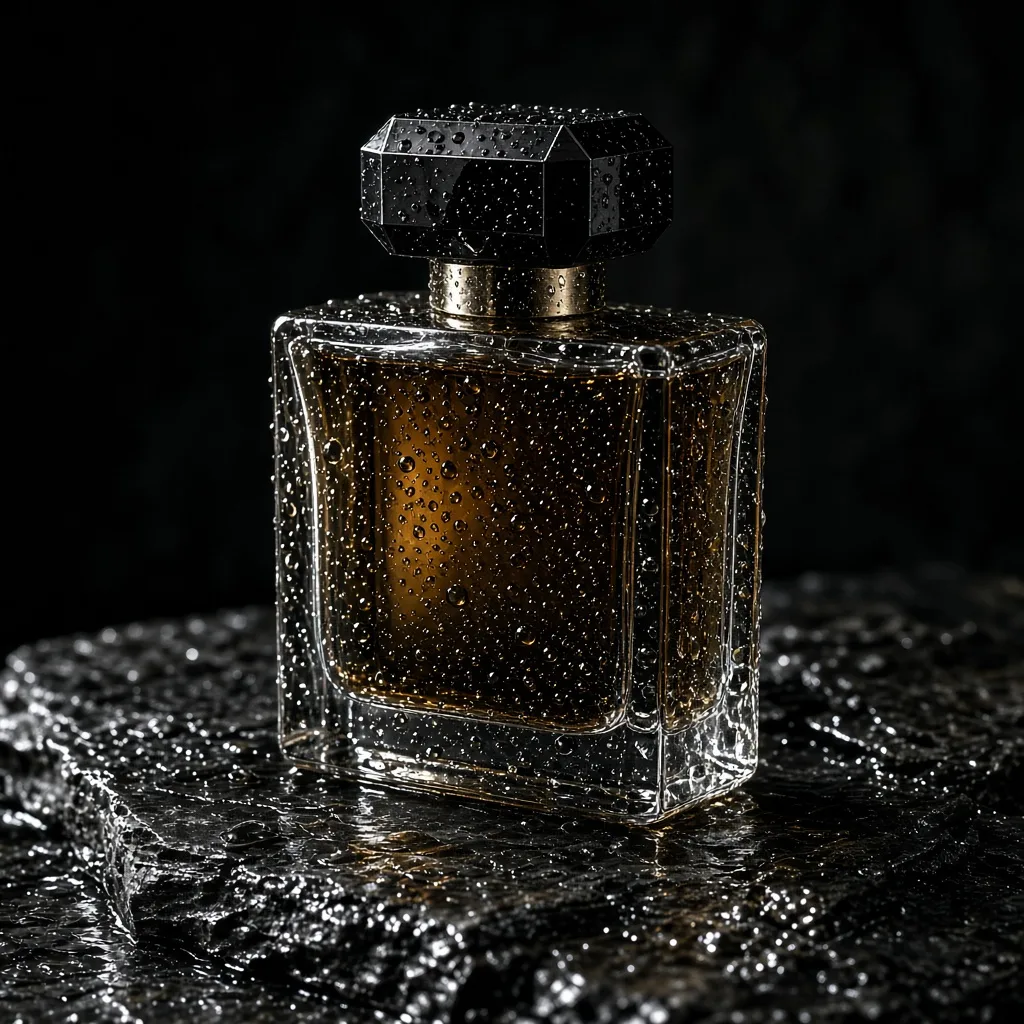
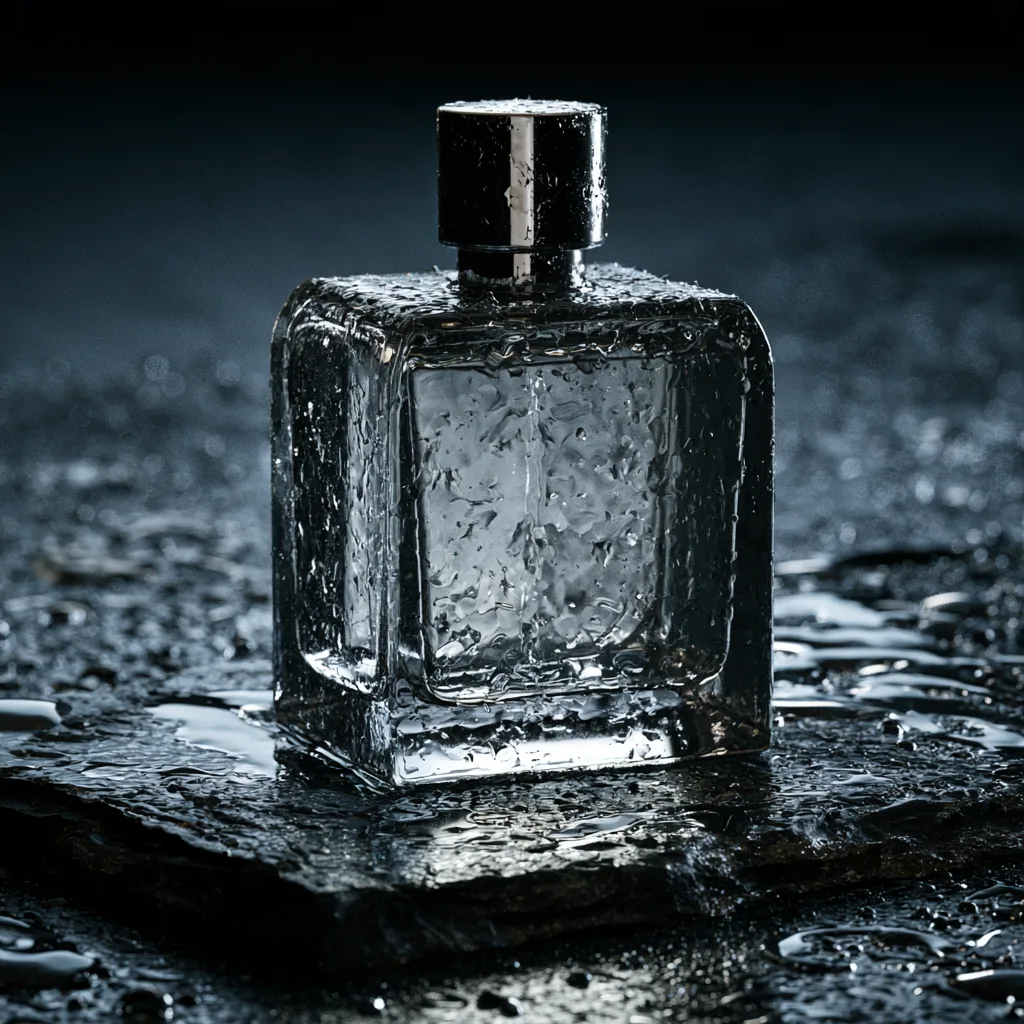
Verdict: Grok Imagine Image 2.0, narrowly. Both nailed the wet slate and the droplets. Grok's liquid reads as perfume; Midjourney's reads as water. For a product shot that has to sell the bottle, the literal frame wins.
Round 4 · Food photography
"Overhead macro photograph of a steaming bowl of tonkotsu ramen, chopsticks lifting noodles, soft window light, restaurant menu photography"
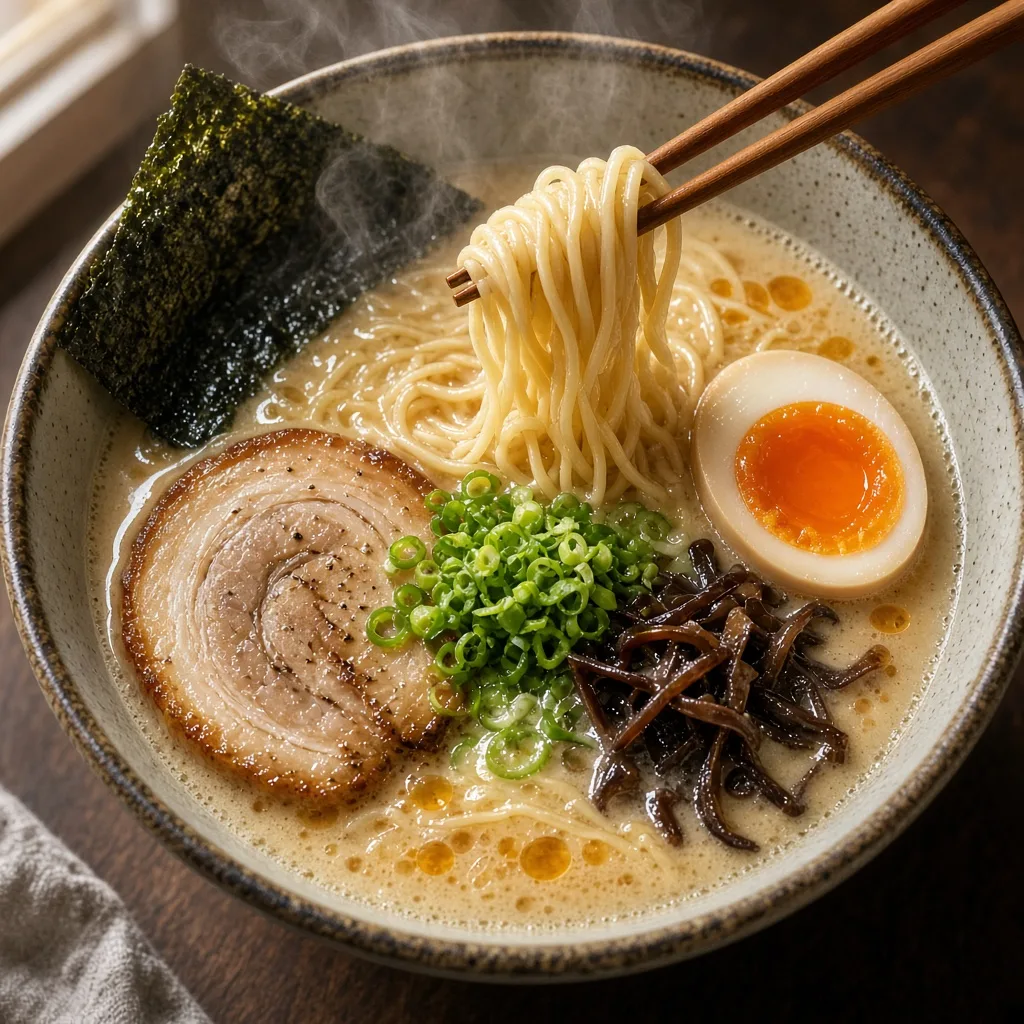
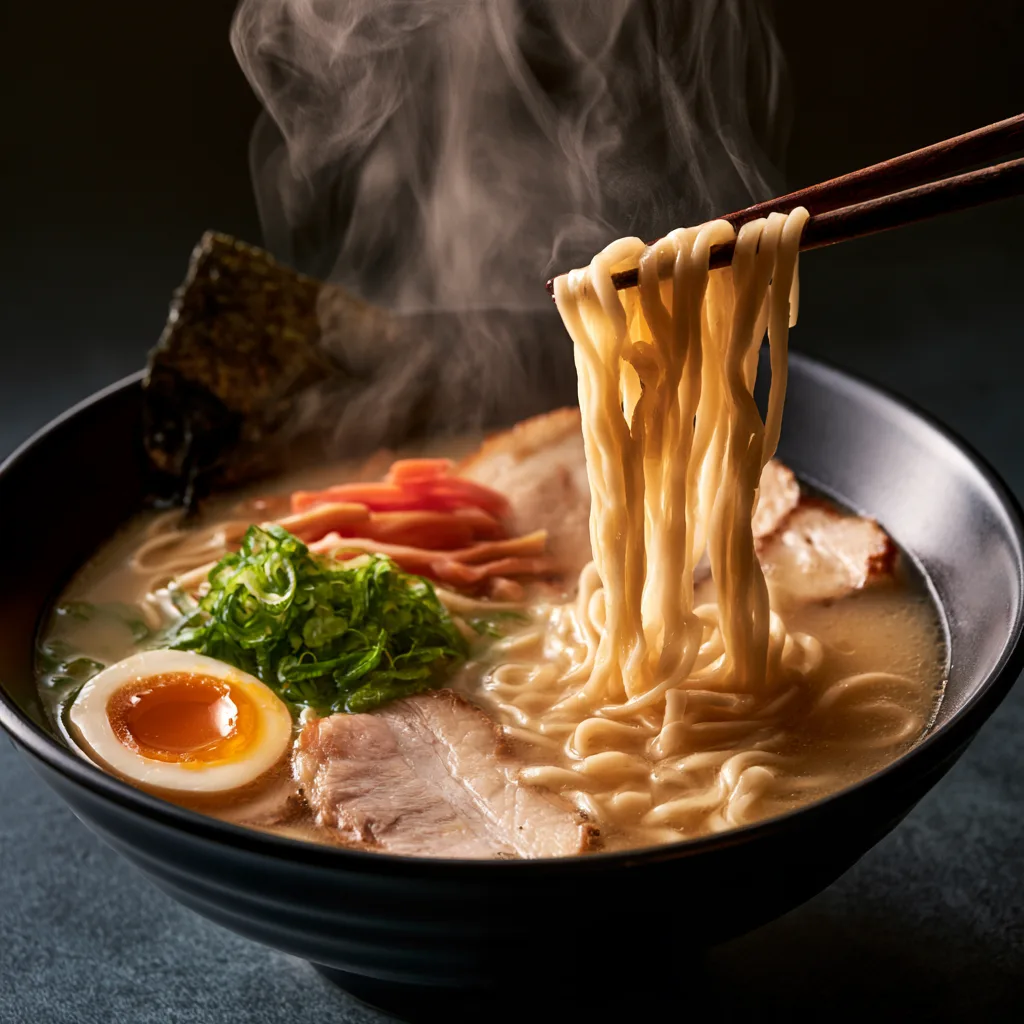
Verdict: tie. Grok followed the brief (overhead, soft light, full toppings); Midjourney made the more dramatic photograph. A menu could run either frame — Grok's for the dish, Midjourney's for the craving.
The scoreboard
| Portrait | Grok Imagine Image 2.0 — followed the brief; Midjourney moodier |
| Poster with text | Grok Imagine Image 2.0 — layout as briefed, title in one line |
| Product photography | Grok Imagine Image 2.0 — the liquid reads as perfume |
| Food photography | Tie — Grok literal, Midjourney dramatic |
| Images per generation | Midjourney — 4 images for 8 credits vs 1 for 9 |
| Speed | Grok Imagine Image 2.0 — ~74–85s vs ~2 min on relax |
| Editing & extras | Grok Imagine Image 2.0 — edits, 3 references, 2K at the same price |
Three rounds to Grok, one tie. The pattern is consistent across all four: Grok follows the brief more literally — the navy coat, the one-line title, the amber liquid, the overhead angle — while Midjourney makes the moodier frame and misses one small detail each time. That is not a flaw in Midjourney; it is the model's personality. It is also why the scoreboard needs the next section.
The four-images difference
Per generation the prices look close — 10 credits against 8. Per image they are not: Midjourney returns four images for its 8 credits, about 2 credits each, and you keep the best. Grok returns one image for 10. If your workflow is "generate a grid, pick the winner, move on", Midjourney is the cheaper model by a wide margin — and its best-of-four is usually better than the first-of-four we scored here, so this test slightly understates it. If your workflow is "generate one exact frame, then edit it", Grok is the only one of the two that edits at all — Midjourney on this studio is text-to-image only, no reference images, no edits, no 2K output.
That shapes the real division of labour. Use Midjourney to explore: four variations per generation, the strongest default atmosphere in the business, the best first draft for anything moody. Use Grok to direct: the poster that must spell the words right and lay them out like a poster, the product shot that must read as the product, the portrait that must keep the brief's details — and then the edit that moves the subject and keeps the face. Our seven-run Grok test is the proof on the text side: it spelled a full invented poster credits block correctly, a test that broke MiniMax H3.
What each generation costs
Live studio rates, checked against the manifest before writing. Full pack pricing is on the pricing page; a credit is about $0.01 in pack terms.
- Grok Imagine Image 2.0 — 10 credits at 1K, 14 at 2K (this test used 1K). Edits 12 credits at 1K, 15 at 2K, with the first reference included; each extra reference adds 2 credits.
- Midjourney v8.2 — 8 / 10 / 17 credits per generation at relax / fast / turbo (this test used relax, 8) — four images per generation, text-to-image only, 1K output.
The whole eight-generation test cost 68 credits — about $0.68 at pack prices — and returned 20 images, because Midjourney's four generations produced sixteen frames. Per kept image, this was one of the cheapest comparisons we have run.
Where this test is limited
One output per prompt per model. Grok returns one image; Midjourney returns four and we kept the first — a fair rule, but Midjourney's best-of-four is usually better than its first-of-four, so this test slightly understates it. Relax, not fast or turbo. Midjourney ran on relax mode (8 credits); faster tiers cost more per generation but do not change the images. Grok ran at 1K, not 2K. The 2K tier costs 14 credits and would be sharper — this test understates Grok's finish quality slightly. Four scenes are not a benchmark. Neither model was asked to do the other's signature job — no multi-reference edit, no style-reference blend — because only one of them can.
Verdict: Grok to direct, Midjourney to explore
At nearly the same price per generation, this is not a price comparison — it is a temperament comparison. Grok Imagine Image 2.0 follows the brief: the navy coat stays navy, the title runs across the top in one line, the perfume reads as perfume — and then it edits, restyles and finishes at 2K for 14 credits. Midjourney v8.2 follows the mood: four atmospheric variations for 8 credits, the frame you would hang on a wall, the model that makes a bowl of ramen look like a film still. Run the search on Midjourney, pick the winner — and when the brief has words on it, or the shot has to match the brief exactly, direct it on Grok.