 Pizyn
How this test ran
Six generations on November 22, 2026, all at Medium quality — the only quality tier Ideogram 4.6 offers on this studio. First outputs kept, no re-rolls, prompts shown verbatim below each image. At the studio's rates the six generations cost 70 credits in total — about $0.70 at pack prices: three 2K images at 10 credits each, one 4K at 20, and two 2K edits at 10 each. Ideogram says 4.6 ranks first on Rapidata's multi-step image edit benchmark at 1,892 — that is Ideogram's own claim, and the lead over 4.5 (1,866) sits within the margin of error, so read it as "at least as good as 4.5" rather than a proven leap. Our two-round edit below is a small, direct check of the same idea.
Test 1 · Text on a poster
"Movie poster for a fictional jazz festival, art deco style, a trumpet player silhouette against a deep blue night sky with stars, large bold title text at the top reading "BLUE NOTE NIGHTS", smaller text below reading "JAZZ FESTIVAL · JUNE 12-14", elegant gold lettering, vintage poster design"
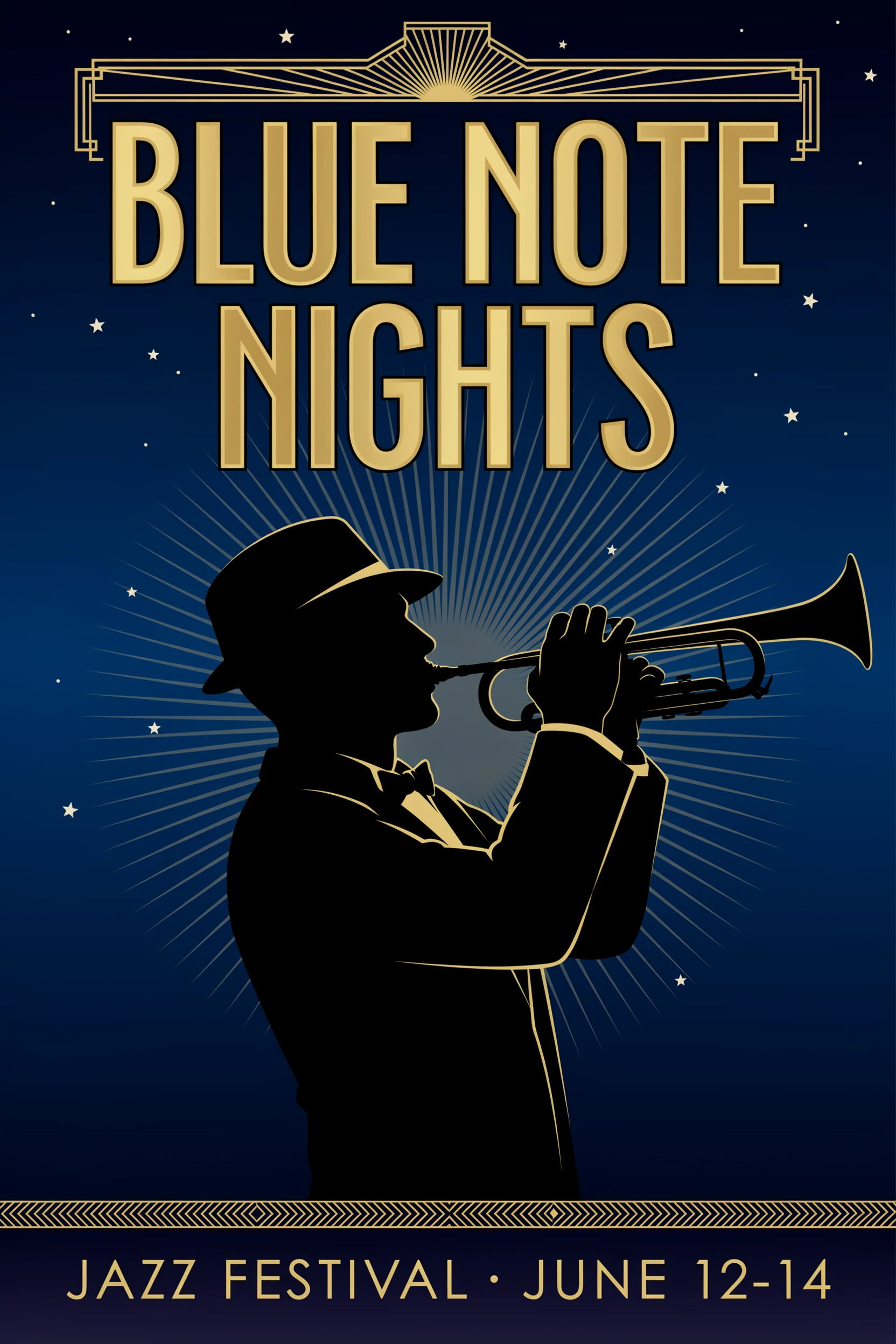
Verdict: pass, twice. Both text tests came back exact on the first try — headline, date line, brand name, origin line. One honest detail: the poster stacks "BLUE NOTE NIGHTS" across two lines rather than one, so the layout is the model's choice, not the brief's. The words themselves are right, which is the part that used to break. If you have ever shipped a poster with a garbled date line, this is the number that matters.
Test 2 · Text on packaging
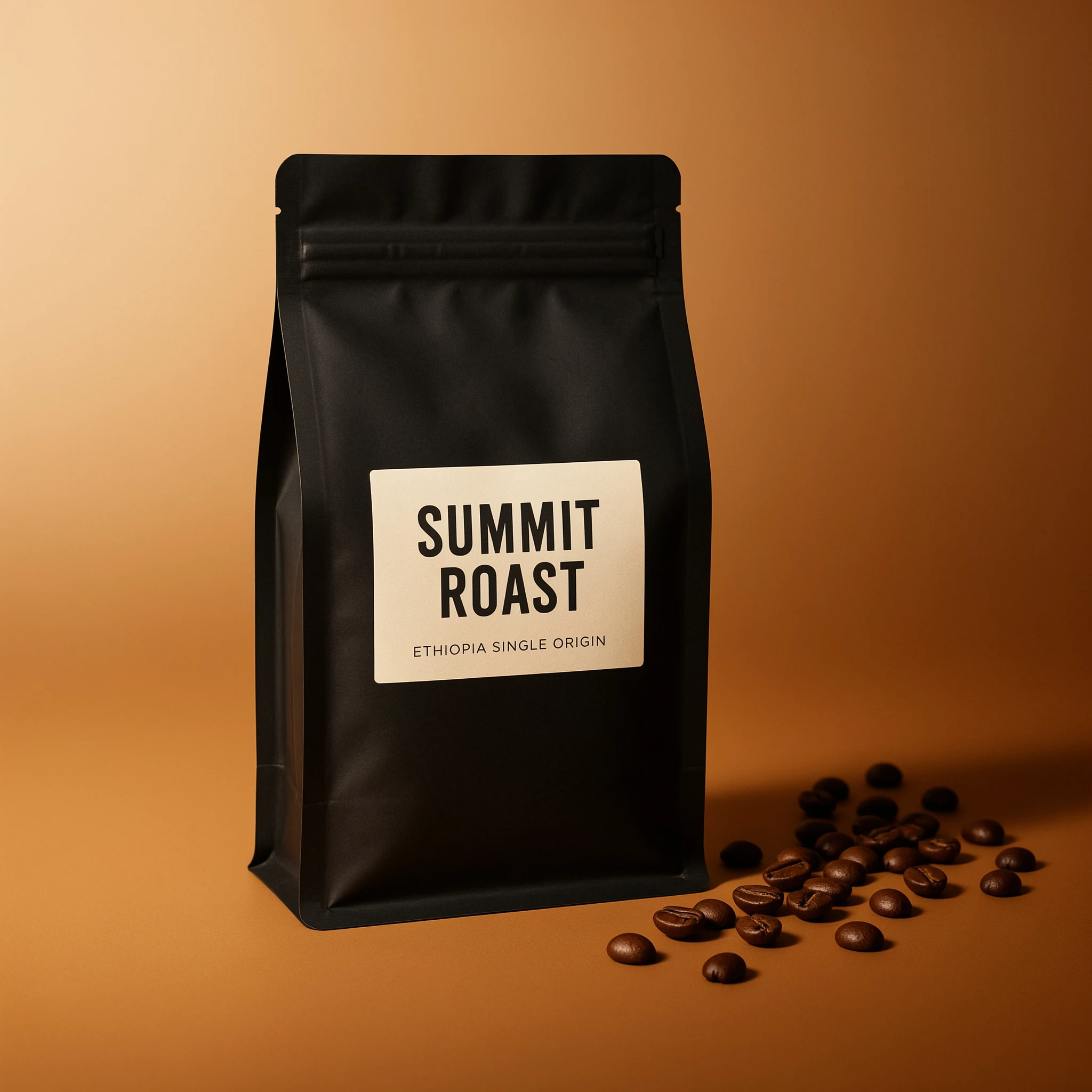
"Coffee bag packaging design, matte black coffee bag with a minimal cream label, large text reading "SUMMIT ROAST", smaller text below reading "ETHIOPIA SINGLE ORIGIN", coffee beans scattered beside the bag, studio product photography, warm light"
The label test is the harder of the two text tests, because the text is small relative to the frame and sits on a curved surface. 4.6 handled both: "SUMMIT ROAST" in large type, "ETHIOPIA SINGLE ORIGIN" in smaller type beneath it, both legible, both spelled right. The bag itself is convincing too — matte black pouch, zip seal, scattered beans, warm studio light. A packaging mockup you could show a client without a disclaimer.
Verdict: pass. Two text tests, zero spelling errors. This is the capability Ideogram is known for, and 4.6 keeps it.
Test 3 · Native 4K
"Photorealistic alpine lake at sunrise, mirror-still water reflecting snow-capped peaks, a wooden cabin with warm lights on the shore, pine forest, mist over the water, extremely detailed, crisp textures"
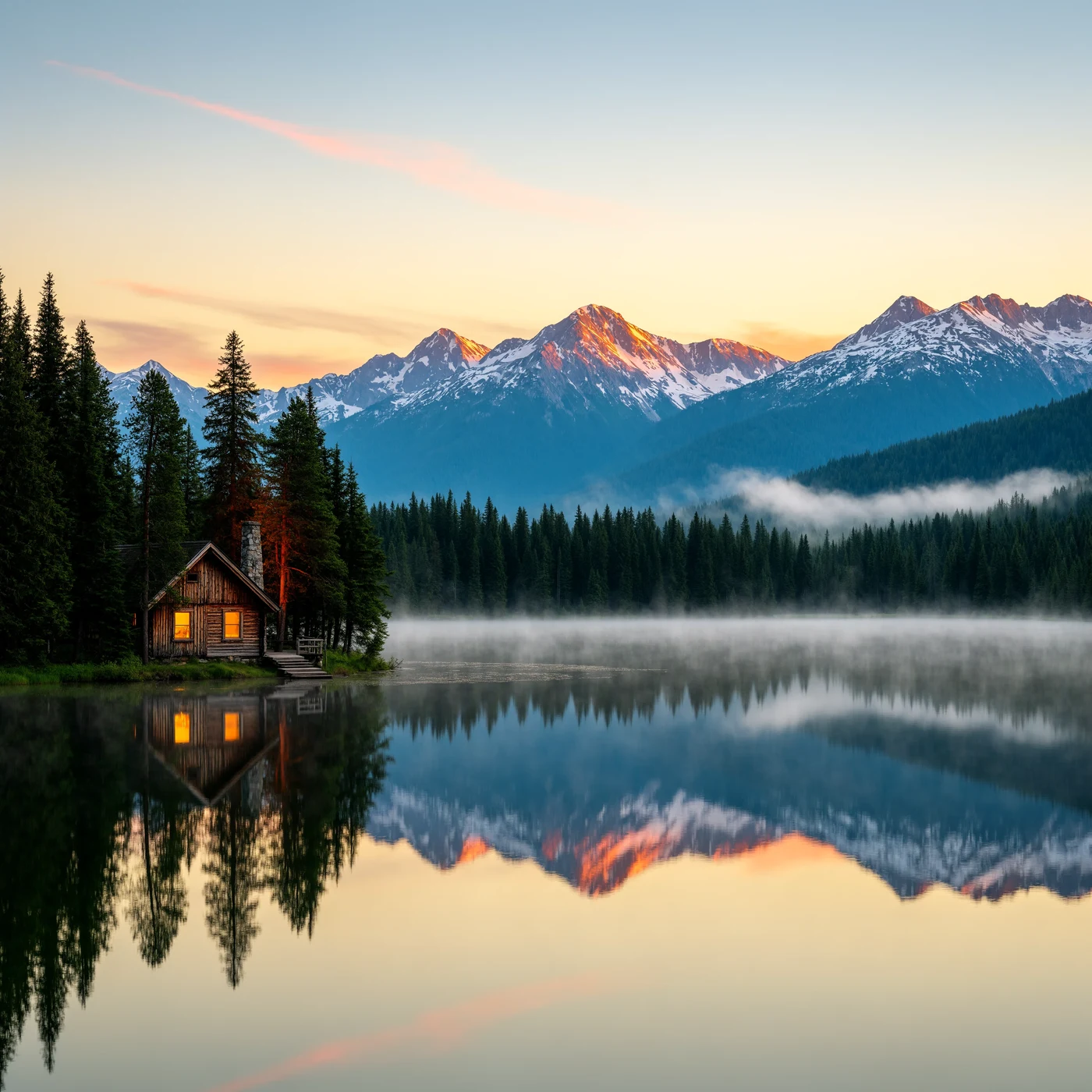
Verdict: pass — and it is genuinely native. The output file measured 4096×4096 pixels. That matters because "4K" in image tools often means a 2K render passed through an upscaler; this one was generated at full size, so the cabin lights, the pine texture and the mist hold up at a size you can crop hard or print large. At 20 credits it costs double the 2K tier — worth it for finals, overkill for drafts.
Test 4 · Precise edits, two rounds
Round 1: "Change the background behind the person to a warm sunset beach scene with soft golden light, keep the person's face, pose and clothing exactly the same"
Round 2: "Change the person's dark coat to a deep red coat, keep the face, pose, sunset beach background and everything else exactly the same"
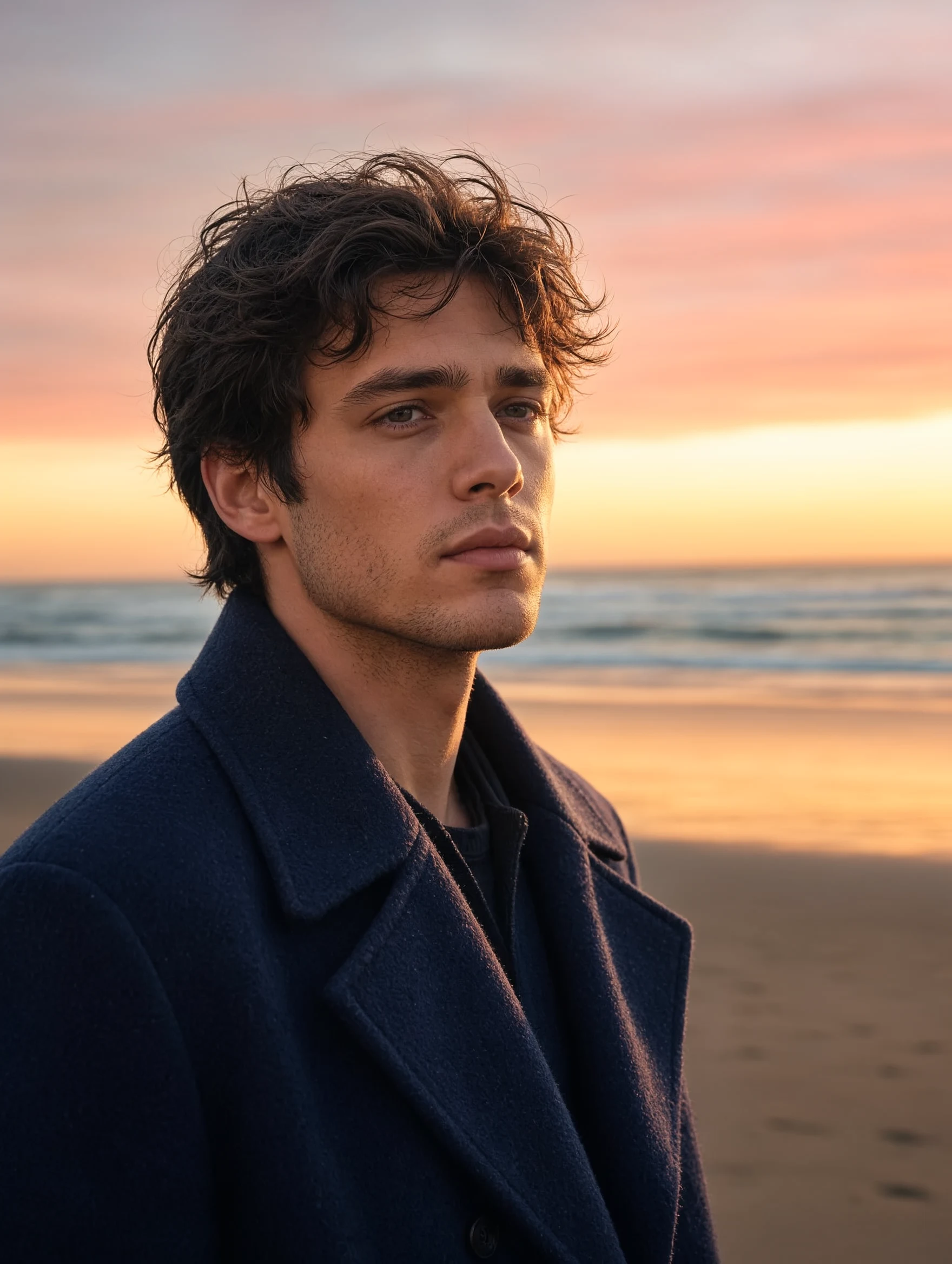
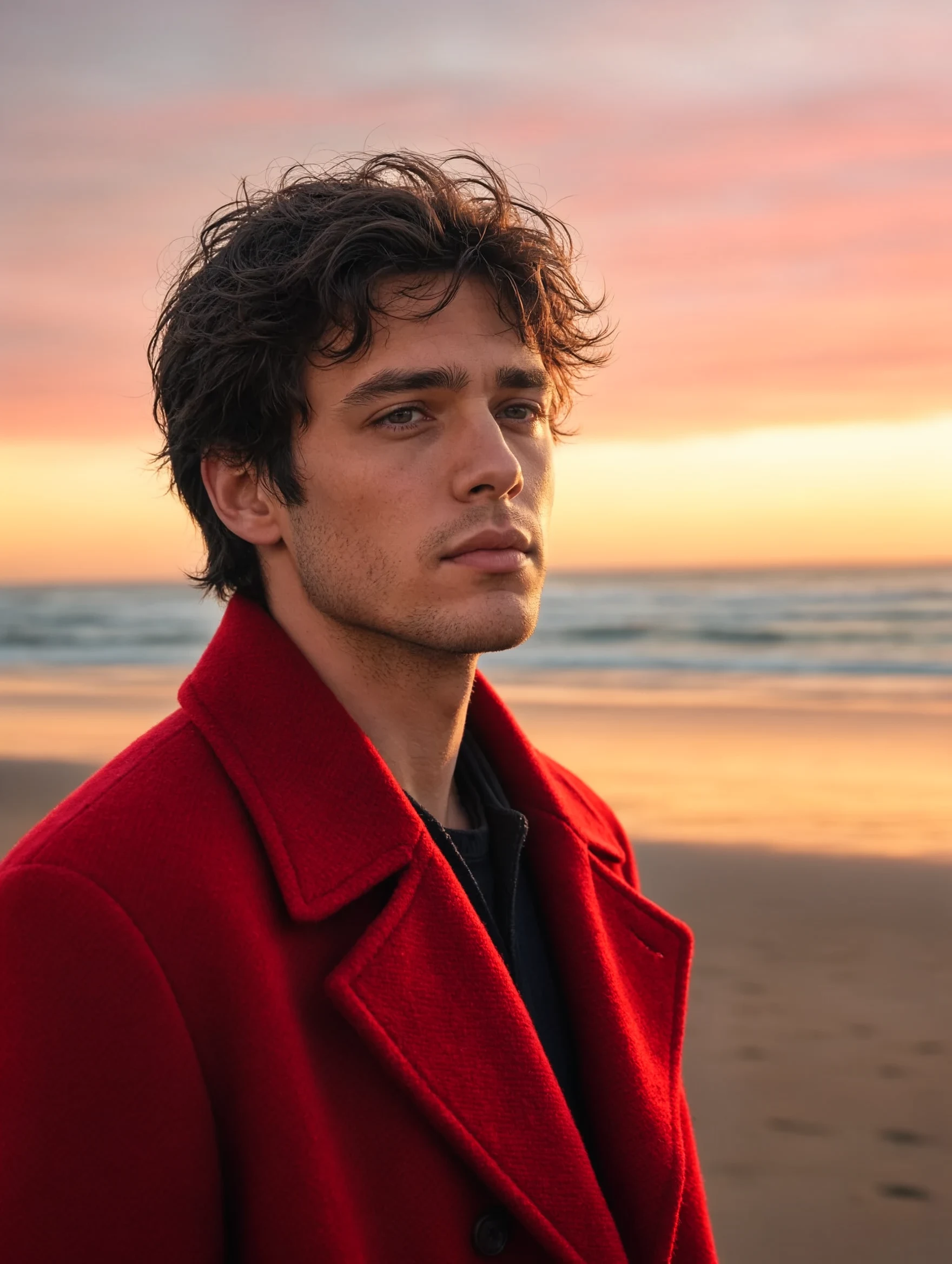
Verdict: pass — this is the strongest result in the test. Round 1 moved the subject from a rooftop to a beach and kept the person intact. Round 2, run on round 1's output, changed one thing — the coat's colour — and left everything else alone: the face, the hair, the pose, the sky, even the footprints in the sand. Two rounds in, nothing has drifted. That is what "precise editing" has to mean in practice, and it is consistent with Ideogram's multi-step editing claim — though two rounds on one portrait are a check, not a benchmark. The source portrait is the rooftop shot from our Grok vs Midjourney test, so the face has now survived three models' handling.
Test 5 · Transparent PNG
"A red vintage scooter in side view, studio product photograph, clean isolated object, sharp details, soft shadow beneath"
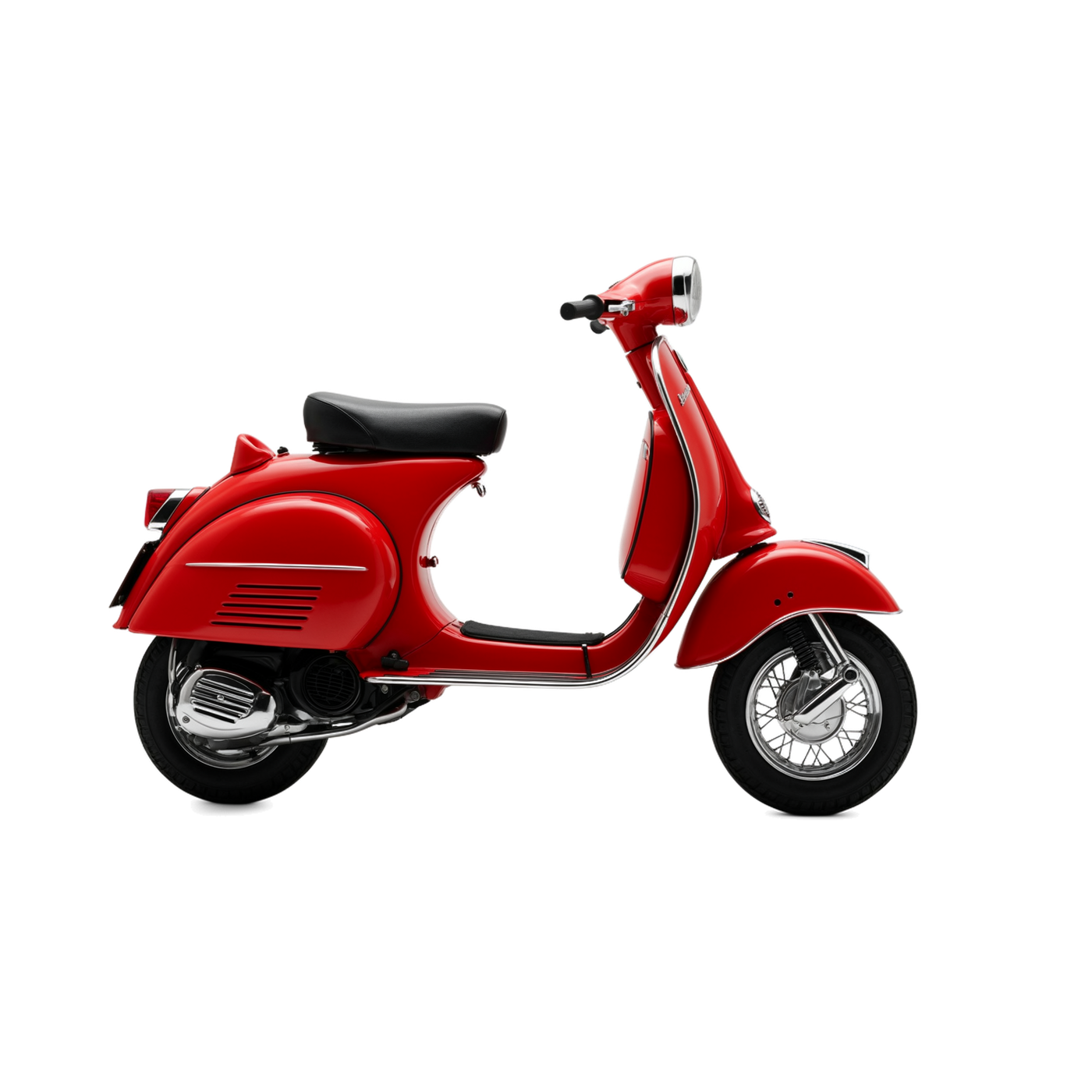
Verdict: pass. Tick "Transparent background" in the studio and the model returns a true RGBA file — no background-removal step, no white box to cut out, no fringing to clean up. We measured the alpha channel pixel by pixel: 82.9% of the frame is fully transparent, the rest is the scooter itself. That makes 4.6 the second model on this studio with native transparency, alongside Seedream 5.5 — see our transparent PNG guide for the full method and the red-background check.
What it costs on Pizyn
Live studio rates, checked before writing. Full pack pricing is on the pricing page; a credit is about $0.01 in pack terms.
- Text to image — 10 credits at 1K and 2K, 20 at 4K. 1K costs the same as 2K, so there is no reason to pick 1K unless you want the smaller file.
- Edits — 10 credits at 1K and 2K, 33 at 4K. Up to four reference images, and extra references are free — the price does not move when you attach more.
The whole six-generation test cost 70 credits — about $0.70 — and returned six usable images, including a print-ready 4K file. The 4K edit at 33 credits is the one price to notice before you click it: it is the most expensive single image on this model by a wide margin, and we did not keep a 4K edit sample here, so that tier is priced but untested in this post.
Best for, and not for
Best for: posters, flyers and ads with real headlines; packaging mockups and labels; product assets that need a transparent background; multi-round edits where each round must change one thing and leave the rest alone; anything where a misspelled word ruins the deliverable.
Not for: 4K edits on a tight budget — 33 credits a frame adds up fast, so draft at 2K and save 4K for the final. And this test did not cover pure photorealistic portraiture from scratch, or scenes with many people, so we are not claiming 4.6 is the best portrait model here — only that its edits keep a face intact across rounds.
Where this test is limited
One output per test. Six generations, six first outputs — a fair rule, but a single sample cannot prove a model never garbles text. Specified text only. Both text tests gave the model the exact words; we did not run the invented-text test (a credits block the model writes itself) that broke MiniMax H3 and that Grok passed — that is the obvious next test for 4.6. Medium quality only. That is the only tier on this studio, so other quality settings were not tested. No 4K edit sample. The 4K edit tier is priced at 33 credits but we kept no 4K edit in this test.
Verdict: the text model that also edits
Six tests, six passes — but the interesting result is not the clean sheet, it is which tests mattered. Text rendering is Ideogram's home turf and 4.6 held it twice. Native 4K is real, measured, and priced at double the 2K tier. And the two-round edit is the result that changes how you work: change the background, then change the coat, and the face is still the same person two rounds later. For posters, packaging and product assets — the work where words and revisions are the job — Ideogram 4.6 is now the default recommendation in this studio, at 10 credits a picture. Try the poster prompt above first: if the words come out right on your brief too, you have found your model.